Key Takeaways
- Radiant heaters mounted into the pergola structure can run so effectively that homeowners often don't need the highest setting.
- Breslow installs heating products from brands like Bromic and Infratech, planned into the design before installation.
- Heater count and placement are scoped to the specific footprint of your space during the design consultation.
- There's no universal heater add-on price — your Breslow designer scopes cost specifically for your project.
“For the two end heaters, I keep them on the high setting… it’s more than adequately hot. Sometimes it’s almost too hot.”
— Homeowners, Norwood NJ
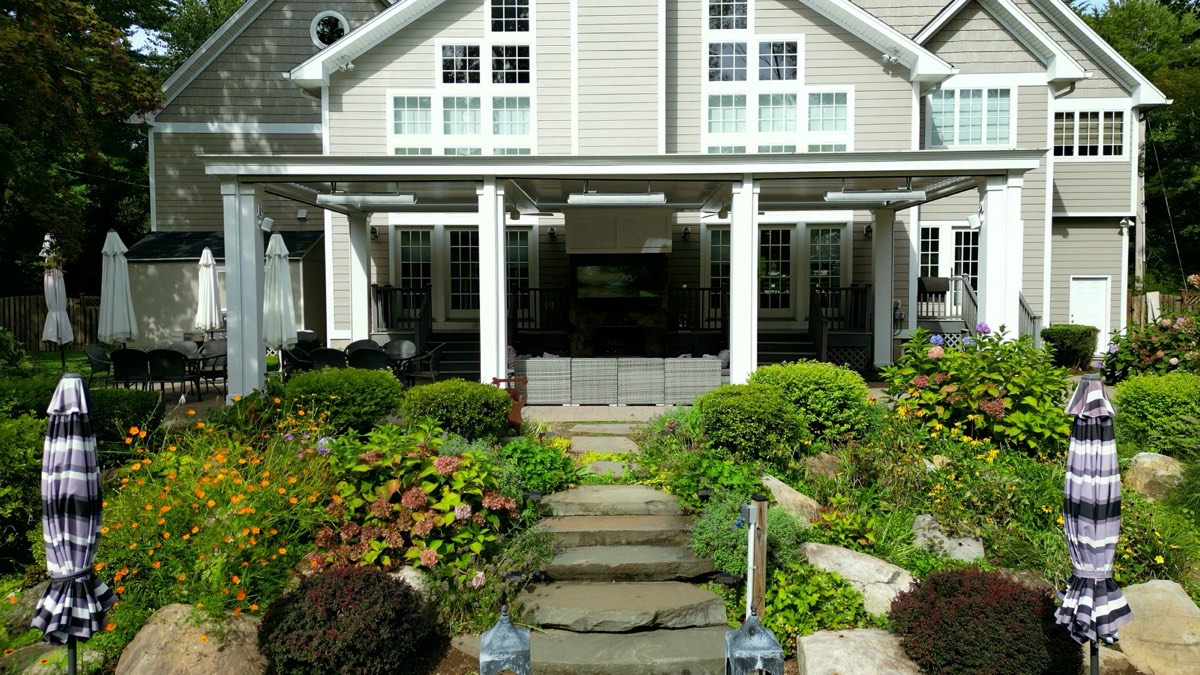
Heating is often the feature homeowners are most skeptical about before a project is built — will it actually keep the space warm, or will it be a token amenity that looks nice but doesn't hold up once the temperature drops? This Norwood, NJ homeowner's testimonial lands on the opposite problem: the heaters work well enough that he doesn't always need them on their highest setting.
What he's actually describing
The detail worth noticing here is specific: two end heaters, run on the high setting, producing more heat than the space sometimes calls for. That's a useful data point for anyone weighing whether integrated heating is "worth it" — it suggests the heating isn't marginal or decorative, it's genuinely capable of carrying the space through cold weather, to the point where dialing it back is the more common adjustment than turning it up.
The reality behind heater placement and output
Breslow installs radiant heating products from established brands including Bromic and Infratech — these are the products behind performance like what this homeowner describes, not a generic or undersized unit. Heaters are typically positioned toward the ends or perimeter of the pergola structure, a placement that spreads warmth across the seating area without crowding the space with visible equipment.
Because heating is planned during the design phase — alongside the louvered roof and any privacy shades — the electrical runs, mounting points, and number of units are all worked out before installation rather than retrofitted. That's part of why output can run strong: the system is sized and positioned intentionally for the specific footprint, not squeezed in as an afterthought.
Independent settings on each heater also matter here. Rather than an all-or-nothing system, most installations allow heaters to be controlled individually or in zones, which is exactly why a homeowner might find that the two end units on high are already more than enough, without needing every heater in the space running at full output.
There's a broader point behind this specific detail: heating in a louvered pergola isn't a single generic accessory dropped into every project the same way. It's part of the same design conversation as the roof itself, sized to the footprint, the number of seating zones, and how the household actually plans to use the space in cold weather. A structure that's mostly used for occasional evening dinners doesn't need the same heating plan as one meant to host a full winter gathering, and that distinction gets worked out well before installation day.
What it means if you're planning heating into your own project
If you're weighing whether to include heaters in your design, ask your designer directly about placement options, how many units a space your size typically needs, and whether they can be zoned or dimmed rather than run at a single fixed output. Overheating a small footprint is a real possibility if the system isn't sized correctly, so this is a conversation worth having early rather than after installation.
There's no set price for adding heating to a project — it depends on the number of units, their placement, and the electrical work involved, and your Breslow designer will scope that specifically for your home. What is published is the pricing range for the base R-Blade structure, which gives you a starting point before heating and other add-ons are factored in.
It's also worth asking how heating interacts with the rest of the structure — for instance, whether the louvered roof needs to be in a particular position for the heaters to work efficiently, or whether privacy shades on the open sides help hold warmth in on a cold, windy evening. These are the kinds of practical questions a design consultation is meant to answer before you're standing outside in January finding out the hard way.
How to see it for yourself
Every Breslow project starts with a free design consultation on Zoom, where heating and other options are part of the conversation from the very first call. If there's a mutual fit, a designer visits your home with a Matterport scanner for exact measurements, and 3D renderings follow on your actual house before anything is built or ordered.
You can browse the Norwood, NJ project referenced in this homeowner's story, or start with a consultation to talk through heating options for your own space.
Frequently Asked Questions
What kind of heaters does Breslow install in a louvered pergola?
Breslow installs radiant heating products from brands including Bromic and Infratech, positioned within the pergola structure as part of the design rather than added afterward.
How many heaters does a typical pergola need?
It depends on the size of the space and how you plan to use it. Many projects use heaters positioned toward the ends or perimeter of the structure; your Breslow designer will scope the right number and placement for your specific footprint during the design consultation.
Can heater output be adjusted or zoned?
Yes — heaters are typically run on independent settings, which is why some homeowners find they don't need the highest setting on every unit to stay comfortable. This is discussed and configured as part of the design process.
Does adding heaters increase the overall project cost?
Heating is an add-on to the base structure, and there's no single universal price — it depends on the number of units, placement, and electrical work required. Your Breslow designer will scope this specifically during your Zoom consultation, alongside the published pricing ranges for the base R-Blade structure.