Key Takeaways
- Fabric quality is at least as important as frame quality — a premium frame under cheap fabric fades and mildews years before the mechanism ever fails.
- Solution-dyed acrylic carries color all the way through each fiber, which is why it resists fading far longer than fabrics that are printed or surface-dyed after weaving.
- Sunbrella and Tempotest are the two solution-dyed acrylic mills Breslow relies on, and both perform well against Northeast sun, humidity, and pollen — the differences come down to weave and pattern selection.
- Fabric on an existing frame can usually be replaced without replacing the whole awning, which is often the right call when the frame and motor are still sound.
An awning's frame gets most of the engineering attention, but the fabric is what actually does the work of blocking sun, and it's the first thing to show its age. Choosing well here matters as much as choosing the right motor or frame — arguably more, since fabric replacement is a far more common service call than mechanism failure.
Why Fabric Is Half the Awning
Two awnings can share an identical frame, motor, and mounting, and still look completely different after five Northeast summers — because the fabric underneath either was or wasn't built for the job. Cheap fabric fades unevenly, picks up mildew in shaded folds, and loses its water repellency within a couple of seasons. Good fabric holds its color, sheds moisture, and stays legible against sun and humidity for years longer. It's the single most visible part of the system, and the part most homeowners underweight when comparing quotes.
It's also the part that ages in public. A frame that's slightly out of adjustment is barely noticeable from the yard; fabric that's faded to a chalky version of its original color, or streaked with mildew along the fold lines, is the first thing anyone sees when they look up at the awning. Weight matters too — heavier fabric weaves resist billowing and flutter in a light breeze and generally hold their shape better over a wide span, which is part of why fabric selection and awning width are worth discussing together rather than picking a pattern last.
Solution-Dyed Acrylic, Explained
Most premium awning fabrics are solution-dyed acrylic, meaning the color is added to the acrylic fiber while it's still in liquid form, before it's ever spun into thread. That's different from fabrics that are woven first and then dyed or printed on the surface — in those, the color sits on top of the fiber and wears off from the outside in. With solution-dyed acrylic, the color runs all the way through, so fading happens slowly and evenly rather than in patches, and the fabric can be power-washed without stripping its finish. It's also inherently resistant to mildew growth, which matters in a climate as humid as the Northeast's.
Sunbrella and Tempotest Compared
Breslow works primarily with two solution-dyed acrylic mills: Sunbrella and Tempotest. Both meet the same fundamental standard — solution-dyed fiber, water-repellent finish, and UV resistance built for years of direct outdoor exposure — and both hold up well against everything a New Jersey or coastal Connecticut summer throws at them.
| Sunbrella | Tempotest | |
|---|---|---|
| Fiber process | Solution-dyed acrylic | Solution-dyed acrylic |
| Water repellency | Factory-applied finish | Factory-applied finish |
| Where each shines | Broadest color/pattern library | Distinct weave textures and Italian-mill patterns |
The practical differences between the two come down to available weave textures, pattern libraries, and specific color families rather than one being meaningfully more durable than the other. Your Breslow designer can walk through current swatch books from both mills during your consultation so the choice comes down to what actually looks right on your house.
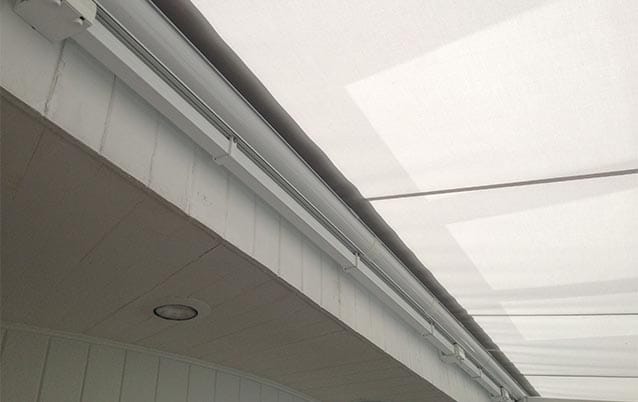
Color, Pattern, and Architecture
Fabric choice is an architectural decision, not just a shade decision. A solid neutral in a tone pulled from your home's trim or stonework reads as a permanent, built-in feature; a bold stripe reads as a more casual, seasonal accent. Darker fabrics absorb more heat and can run warmer to the touch, while lighter tones reflect more light back up, which some homeowners find changes how bright the shaded area feels underneath. There's no universally correct answer — the right pattern is the one that matches how formal or casual the rest of your outdoor space reads.
It also pays to think a season ahead rather than picking straight off a swatch card in isolation. A fabric that looks striking against a single sample can read very differently across a twenty-foot span in direct sun, and colors that feel bold indoors often settle down considerably once they're stretched across an awning outdoors. Bringing a swatch outside, at the time of day you'll actually use the space most, is a simple step that prevents most color regrets.
Care and Cleaning
Solution-dyed acrylic is far easier to maintain than older fabric types, but it isn't maintenance-free. Regular brushing or a light rinse keeps dirt and pollen from working into the weave, and the awning should always be allowed to dry fully before retracting it — closing wet fabric is one of the fastest ways to grow mildew in the folds. Harsh detergents and pressure washing at close range can strip the water-repellent finish over time; a mild soap solution and a soft brush handle most seasonal cleaning without damaging the coating.
Ask your contractor: is this solution-dyed fabric, or is the color printed on the surface? Run your fingernail across a cut edge — solution-dyed color goes all the way through.
Replacement Fabric on Existing Frames
When an awning's frame and motor are still sound but the fabric has faded or torn, a full replacement usually isn't necessary — most quality frames accept a new fabric skin without touching the mechanism underneath. This is often the more economical path for an awning that's a decade or so old but structurally fine, and it's a common request that comes through Breslow's service team, which services every product it installs for the life of that product regardless of who installed it originally.
Choosing Yours
Fabric selection is best done against actual swatches, in daylight, against your home's real materials — not from a screen. Breslow's awning line pairs Sunbrella and Tempotest fabric options with the frame and motor selections covered elsewhere on this site, and a free design consultation on Zoom is the place to start narrowing down both together. Browse our project portfolio to see how different fabrics and colors read on real homes.
Frequently Asked Questions
What's the best fabric for a retractable awning in the Northeast?
Solution-dyed acrylic fabrics from mills like Sunbrella and Tempotest perform best against Northeast summers — they resist fading, shed water, and hold up to humidity far better than printed or surface-dyed alternatives.
What is solution-dyed acrylic fabric?
It's fabric where color is added to the acrylic fiber while it's still liquid, before spinning, so the color runs all the way through each thread rather than sitting on the surface. That's why it fades slowly and evenly and can be cleaned without stripping the color.
How do I clean mold or mildew off awning fabric?
Let the fabric dry fully, then clean it with a mild soap solution and a soft brush rather than harsh detergents or close-range pressure washing, which can strip the water-repellent finish. Always retract awnings dry, since closing wet fabric is one of the most common causes of mildew in the folds.
Can awning fabric be replaced without replacing the whole awning?
In most cases, yes. If the frame and motor are still sound, a new fabric skin can typically be fitted to the existing structure — a common and more economical service request for an older awning that's mechanically fine but visually worn.