Key Takeaways
- Most awning mold is surface mildew that comes off completely with a mild soap solution and a soft brush — not a sign the fabric is failing.
- Bleach, solvents, and pressure washers can strip the fabric's water-repellent finish, which often makes future mold worse, not better.
- Re-treating water repellency after cleaning is the step most homeowners skip — and the reason mold reappears within a season.
- Retracting the awning while it's still damp is the single most common cause of recurring mold.
Mold on awning fabric is one of the most common calls we get — and one of the most misunderstood. In most cases it's surface mildew, not a structural failure, and it comes off completely with the right method. The problem is that the wrong method — harsh bleach, a pressure washer, or a degreasing dish soap — can strip away the very finish that was keeping mold at bay in the first place, guaranteeing it comes back faster next time. It helps to think of fabric care the same way you'd think of caring for outdoor cushions or teak furniture: routine, not remedial. A few minutes of attention each month prevents most of what would otherwise become a stubborn weekend project.
Why Mold Happens on Awnings
Mold needs three things: moisture, organic material, and time. Retracting fabric while it's still damp from morning dew or an overnight rain traps humidity inside the folds, where it stays shaded and undisturbed for days. Add pollen, leaf debris, and airborne spores, and the folds become an ideal environment. Solution-dyed acrylic resists staining better than most fabrics, but it isn't mold-proof — the factory water-repellent finish is doing most of that work, and it wears down over time.
Awnings with an open frame, where the fabric sits exposed to the air even when retracted, tend to dry out faster than semi-cassette or full-cassette designs, which fold and enclose the fabric more tightly. That enclosure is excellent for protecting fabric from UV and debris, but it also means any moisture trapped inside stays trapped longer — which is exactly why retracting a still-wet awning is worth avoiding on these systems in particular.
What You'll Need (and What to Never Use)
A soft-bristle brush, a garden hose, and a mild soap formulated for outdoor fabrics are all that most mold problems require. What you should avoid: concentrated bleach or solvent-based cleaners, which break down the water-repellent coating; a pressure washer at close range, which can drive water into the weave and damage the fibers; and dish soaps with degreasers or citrus oils, which strip finish just as effectively as bleach does.
A garden sprayer makes it easier to apply the soap solution evenly across a large span of fabric rather than working from a bucket and rag. And if you're unsure how a particular soap will interact with the fabric's finish, test it on a small, inconspicuous corner first and let it dry before committing to the whole awning.
Step-by-Step Cleaning
- Brush off dry debris — leaves, pollen, dirt — before introducing any water.
- Rinse the fabric with a hose, working from underneath where mold tends to concentrate.
- Apply a diluted mild soap solution and let it sit for several minutes to loosen the mold.
- Scrub gently with a soft brush, working in the direction of the weave rather than against it.
- Rinse thoroughly — leftover soap residue attracts new dirt and can accelerate future staining.
- Extend the awning fully and let it air-dry in the sun before retracting it again.
Work in sections if the awning is large, rinsing each one thoroughly before moving to the next, so soap doesn't dry on the fabric and leave a visible line.
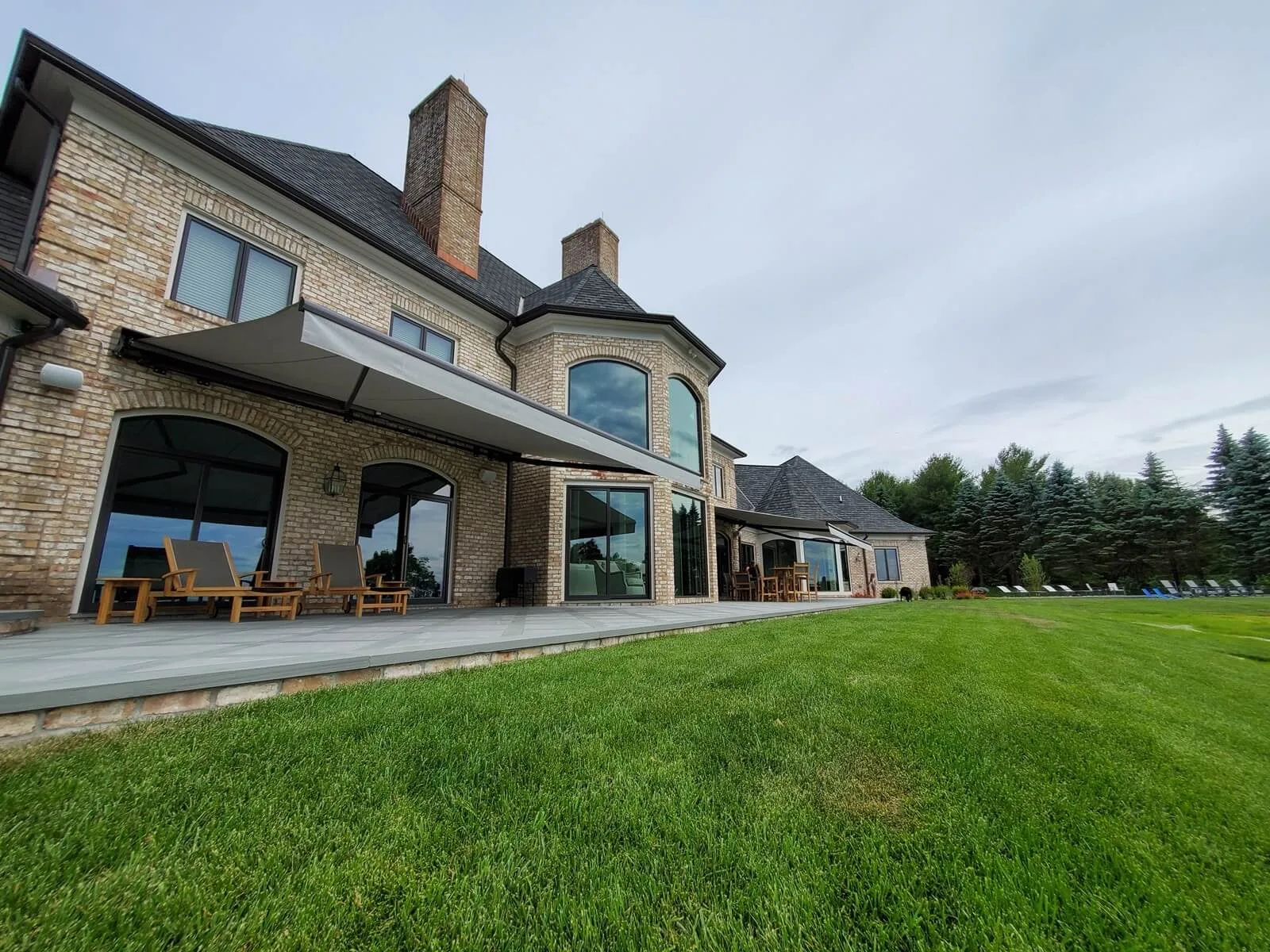
Re-Treating Water Repellency
Cleaning removes the mold; it doesn't restore the finish that's already been compromised. Once the fabric is completely dry, a fabric guard or water-repellent treatment made for awning acrylics can refresh that protective layer. Skipping this step after a deep clean is one of the most common reasons mold reappears within a single season.
Most water-repellent treatments are applied with a simple pump sprayer and need a full dry day with no rain in the forecast to cure properly. Manufacturers vary on how often re-treatment is needed, so follow the product's specific instructions rather than a generic schedule.
Prevention Habits
Most mold problems trace back to one habit: retracting a wet awning. Let dew and rain fully evaporate before closing it, trim back overhanging branches that shed debris into the folds, and give the fabric a light rinse periodically through the season rather than waiting for a visible problem.
It also helps to walk the awning periodically through the season and look for any spot where water is pooling rather than shedding off the edge — a pooling point often signals a pitch or tension issue that, left alone, keeps that section of fabric wet longer than the rest and gives mold a head start.
Seasonal timing matters too. A light rinse at the start and end of the season, before the fabric goes into extended storage or comes back out of it, catches early buildup before it has a chance to set into the weave over months of inactivity.
Ask your contractor: is this surface mildew, or has the repellent finish already broken down? Cleaning solves the first problem — only re-treatment or new fabric solves the second.
Professional Cleaning and Service
If mold persists after a proper cleaning, or the fabric looks discolored and worn beyond what soap and water can fix, that's usually a sign the underlying finish is gone rather than a sign you cleaned it wrong. Our service team can assess the fabric in person and tell you honestly whether it needs re-treatment, a recover, or a full system replacement — and if it's time for something new, our current retractable awning lineup carries fabrics built to resist staining far longer. A professional cleaning typically goes beyond what's practical from a hose and a ladder — full extension, close inspection of every seam and grommet, and a controlled re-treatment application rather than a guess at coverage.
Frequently Asked Questions
Will bleach remove mold from awning fabric?
Concentrated bleach and solvent-based cleaners can lift mold, but they also strip the fabric's water-repellent finish, which usually causes mold to return faster and more aggressively. A mild soap solution and a thorough rinse handle most mold safely without damaging the finish.
Can I pressure-wash my awning fabric?
It isn't recommended, especially at close range or high pressure. A pressure washer can force water into the weave and damage the fibers. A standard garden hose provides enough rinsing power for most cleaning.
Why does the mold keep coming back after I clean it?
Recurring mold usually means the fabric is being retracted while still damp, or the water-repellent finish has worn down and needs to be re-treated. Addressing both the habit and the finish together is what actually stops it from returning.
When should I call a professional instead of cleaning the awning myself?
If mold persists after a proper cleaning, or the fabric looks discolored and the finish appears compromised, a professional assessment will tell you whether re-treatment, a recover, or replacement is the right next step.