Key Takeaways
- A pergola kit typically includes hardware and an assembly manual only — not site-specific engineering, footings, permitting, or electrical work.
- Kit assembly and long-term service are usually handled by two different parties; design-build firms like Breslow handle design, engineering, permitting, fabrication, installation, and lifetime service under one roof.
- A kit can be a reasonable choice for small, unattached, non-motorized structures — the case for custom design-build grows with span, attachment, and motorization.
- Published Breslow pricing for a fully engineered, custom-installed louvered pergola starts around $65,000 for a compact footprint and scales with size and integrations.
What a kit actually includes
A pergola kit is, functionally, a box of extruded aluminum or wood components, pre-cut hardware, and an assembly manual, shipped to a driveway. What's inside the box is usually honest about its scope: posts, beams, fasteners, and — if the kit is motorized — a louver mechanism and a remote. What's rarely inside the box, and rarely mentioned in the marketing copy, is anything that happens before the box ships or after the last screw is turned.
That's not a criticism of the hardware itself. Reputable kit manufacturers build components that do what they're advertised to do. The gap is upstream and downstream of the box: site-specific engineering, permitting, footings sized to your actual soil and frost line, electrical run to code, and — critically — a party that answers the phone in year five.
What's missing: the other half of the project
A structure is only as good as what it's attached to and what it's sitting on. Kits are engineered generically, to a published wind and snow rating under idealized conditions — not to your specific span, your specific exposure, or your specific roofline. Real engineering, where required, accounts for your site's actual loads, and a PE stamp on that engineering is what a permitting office — and a future buyer's inspector — actually wants to see. Our guide to choosing a pergola contractor walks through what to ask about this before signing anything.
Footings are the same story. A kit ships with generic footing recommendations; what your yard needs depends on soil composition, frost depth, and whether the structure is attached or freestanding. Electrical for lighting, motors, heating, or screens has to be run and, where required, permitted correctly — a step that has nothing to do with the kit itself and everything to do with who's standing in your yard doing the work.
Who assembles it — and who answers in year five
Kits are typically assembled by whoever the homeowner hires locally — a handyman, a general contractor unfamiliar with the specific system, or the homeowner personally. That's assembly, not installation: following a manual to put together parts that arrived in boxes. When a motor fails, a louver seal leaks, or a footing settles unevenly a few years in, the assembler is rarely still reachable, and the manufacturer typically routes warranty questions back through the original dealer — who may or may not still carry that product line.
Design-build firms sell a different relationship. Breslow designs, engineers, handles or assists with permitting where needed, fabricates, and installs every project with our own crews — no subcontractors — and then services what we install for the life of the product. That's a structural difference in who's accountable when something needs attention a decade from now, not a marketing distinction.
Ask your contractor: "If a motor fails in year six, who do I call — and are they still in business?" A kit seller often can't answer for certain. A design-build firm with its own service division can.
“Breslow followed up with phone calls, text, emails — checking in, seeing how the process was going… always respectful, always professional, and clean.”
— Homeowners, Fairfield County CT · watch real client clips
When a kit is honestly the right call
None of this means kits are always the wrong choice. For a small, unattached, non-motorized structure over a modest patio, with modest spans and no complex integrations, a quality kit assembled correctly can be a perfectly reasonable answer — particularly on a tighter budget. The honest line is where spans get larger, where the structure attaches to the home, where motorization, screens, heating, or lighting enter the picture, or where the project sits in a jurisdiction that requires stamped engineering. Past that line, the gap between kit and custom stops being about aesthetics and starts being about liability and longevity.
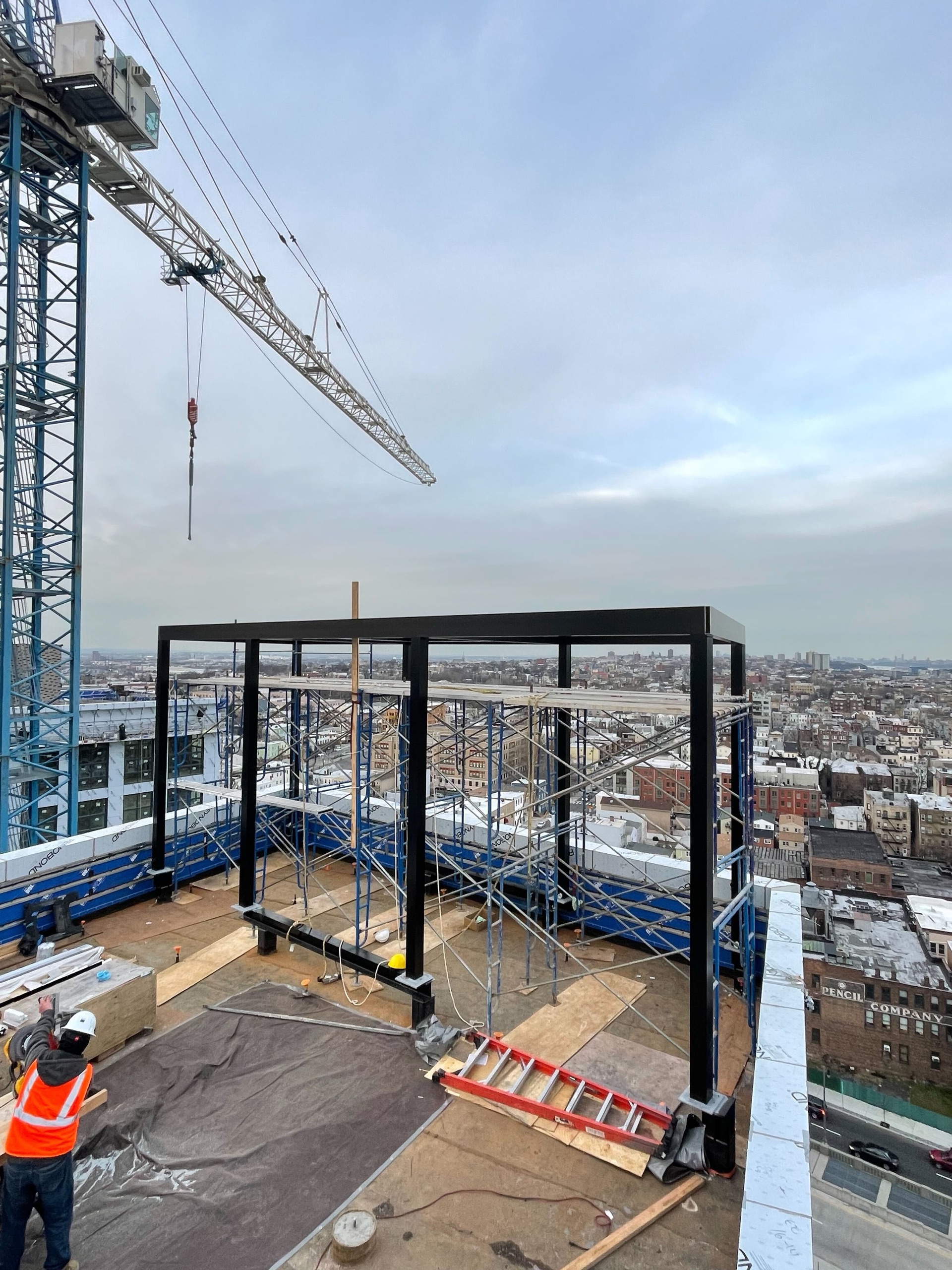
Long-term cost comparison
| Pergola Kit | Custom Design-Build | |
|---|---|---|
| Upfront price | Lower | Higher |
| Site-specific engineering | Generic only | PE-stamped where required |
| Permitting | Homeowner's responsibility | Handled or assisted by the firm |
| Footings | Generic recommendation | Sized to actual soil and frost line |
| Installation crew | Third-party assembler | Firm's own trained crew |
| Year 5–10 service | Often no clear point of contact | Lifetime service from the installer |
| Resale documentation | Rarely available | Engineering and permit paper trail |
What design-build means
Design-build is a single point of accountability across every phase — design, engineering, permitting, fabrication, installation, and service — rather than a homeowner acting as general contractor across separate vendors for each step. It typically costs more upfront than a kit, and the published tiers on our cost page reflect that a fully engineered, custom-installed louvered pergola project runs from roughly $65,000 for a compact footprint into the low hundreds of thousands for larger, multi-bay structures — a materially different number than a kit's sticker price. Browse completed custom-built projects in our project portfolio.
What that number buys is the part that doesn't show up on a spec sheet: a structure sized and engineered for your actual roof, your actual soil, and your actual weather exposure, installed by a crew that built it, and serviced by the same company for as long as you own the property. For a modest, unattached structure, a kit may be the right call. For anything attached to the home, motorized, or built to last decades, the long-term math tends to favor design-build — and a Zoom consultation is the fastest way to find out which side of that line your project falls on.
Frequently Asked Questions
What's the real difference between a pergola kit and a custom-built pergola?
A kit is a box of pre-cut components and a manual, typically assembled by a local handyman or contractor without site-specific engineering, permitting, or a long-term service relationship. A custom design-build pergola is engineered for your exact site, permitted where required, installed by the firm's own crew, and serviced for the life of the product.
Is a pergola kit engineered for my specific yard?
No. Kits are engineered to a generic published wind and snow rating under idealized conditions, not to your specific span, soil, frost line, or exposure. Custom design-build projects include site-specific engineering, with a PE stamp where required.
Who do I call if something goes wrong with a kit pergola years later?
That depends on who assembled it, and that party is often no longer reachable. A design-build firm that installs its own work, like Breslow, provides lifetime service for the products it installs, which is one of the biggest practical differences between the two approaches.
Is a pergola kit ever the right choice?
Yes — for a small, unattached, non-motorized structure over a modest patio with straightforward spans, a quality kit assembled correctly can be a reasonable, lower-cost option. The case for custom design-build grows stronger as spans increase or the project involves attachment to the home, motorization, screens, heating, or lighting.