Key Takeaways
- Every appliance in an outdoor kitchen needs an explicit outdoor rating from the manufacturer — a stainless finish alone is not proof of exterior durability.
- The grill is the anchor of most packages, but layout, ventilation, and clearances should be decided before the model is.
- Outdoor-rated refrigeration is built for a wider ambient temperature range than indoor units, which matters once real winters enter the picture.
- Each appliance carries its own utility requirement — gas, water, or dedicated electrical — and planning them appliance-by-appliance avoids an undersized rough-in.
Outdoor-Rated or Nothing
The single most important rule in outdoor kitchen appliances is also the most commonly ignored: if it isn't explicitly rated by the manufacturer for full outdoor exposure, it doesn't belong outside — not under a roof, not on a covered patio, not "mostly protected." Indoor appliances are engineered around a narrow, controlled environment. Outdoor units are built with corrosion-resistant materials, sealed electronics, and components designed to handle humidity swings, direct sun, and in this climate, real cold.
This distinction matters beyond performance. Installing an indoor-rated appliance outdoors typically voids the manufacturer's warranty outright, and depending on the appliance, it can raise real gas or electrical safety concerns. When you're comparing appliance options, the manufacturer's own outdoor-rating documentation is the only reliable source — not a similar-looking finish or a salesperson's assurance.
It's worth checking this even on appliances that look nearly identical to their indoor counterparts. Two units can share the same stainless finish and control layout while one is rated for direct weather exposure and the other isn't — the difference lives in the gaskets, insulation, and internal components you can't see on a showroom floor.
The Grill Decision
The grill is usually the first appliance chosen and the one that anchors the rest of the layout, but the decision that matters most isn't the brand — it's how the grill sits in the space. Clearances to combustible materials, ventilation above the cooking surface, and proximity to seating all need to be worked out before a specific model is locked in, because retrofitting clearances after a counter is built is a far more expensive fix than planning them up front.
Built-in grills also draw more gas than most people expect, which feeds directly into how the gas line for the whole kitchen gets sized — a detail worth confirming with whoever is designing the utility rough-in, not assuming from the appliance spec sheet alone.
Ask your contractor:
"Is this specific model outdoor-rated by the manufacturer, or is it an indoor unit you're installing in an outdoor enclosure? Ask for the documentation, not just the assurance."
Refrigeration Outside
Keeping drinks and perishables at the kitchen instead of running back inside is one of the most-used features of a well-designed outdoor kitchen, but standard refrigerators — even ones with a stainless exterior — are calibrated for a narrow indoor temperature range and often fail or run inefficiently once ambient temperatures swing wide, especially in winter. Outdoor-rated refrigeration units are built with different compressors and insulation specifically to handle that range, which is the feature to confirm before you commit to a unit, not an afterthought.
Specialty: Pizza Ovens and Burners
Beyond the grill, the most common additions are a side burner for sauces, sides, or simmering, and a pizza oven for higher-heat, wood-fired or gas-fired cooking. Both are worth the investment if they match how you actually entertain — but both also carry their own utility and clearance requirements, and a pizza oven in particular generates significantly more radiant heat than a grill, which affects how close it can sit to cabinetry, seating, or any structure overhead.
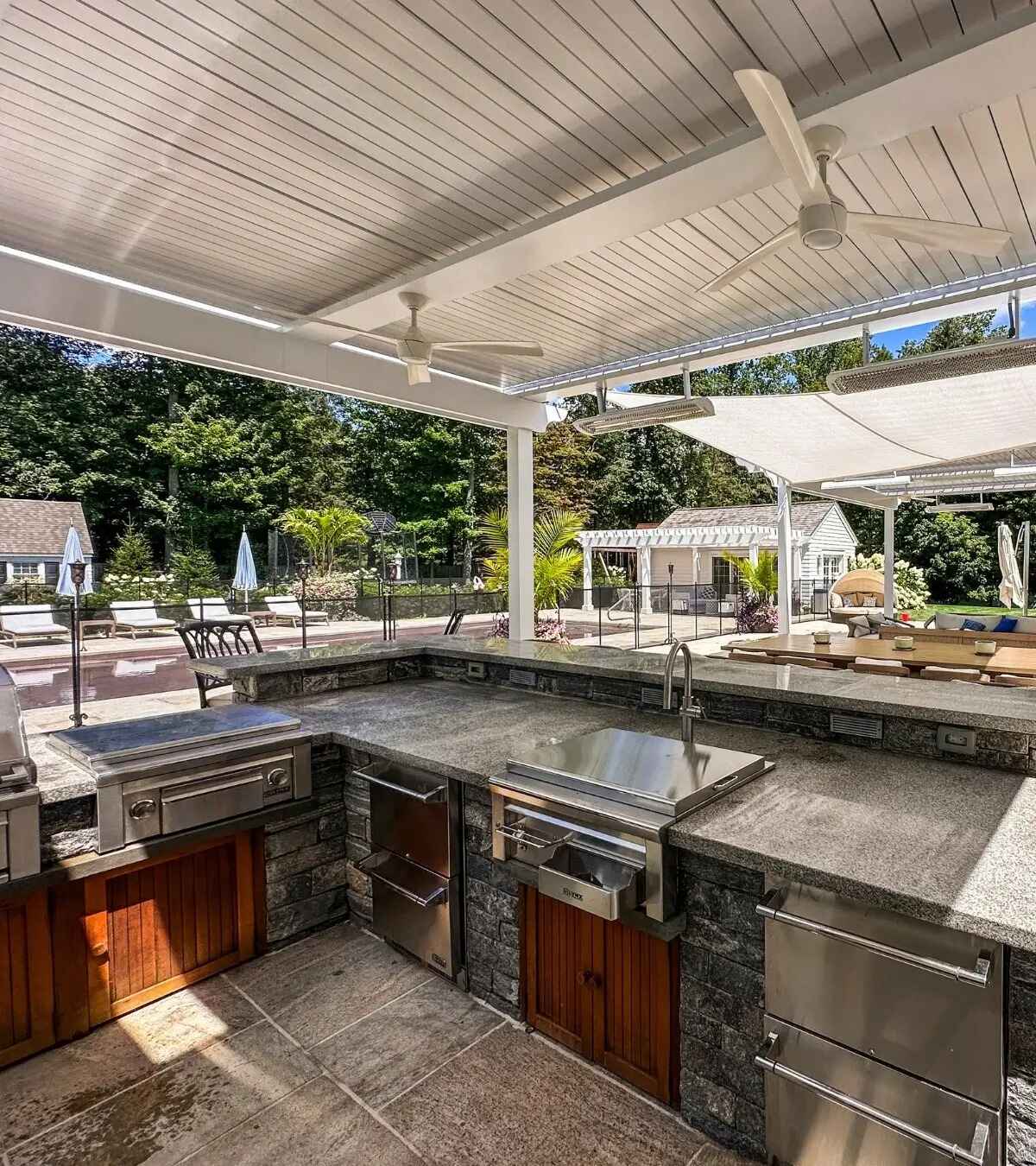
Utilities Each Appliance Needs
Every appliance in the package draws on one of three utilities, and planning them together — rather than one at a time as appliances get added — is what prevents an expensive mid-project correction:
- Gas. Grills, side burners, and pizza ovens typically need a dedicated gas line sized for the combined load, not just the largest single appliance.
- Water. A sink needs both supply and drainage; some refrigeration units with icemakers need a dedicated water line as well.
- Electrical. Refrigeration, lighting, and any powered features need a dedicated, weatherproof circuit — not an extension cord run from the house.
| Appliance | Primary utility | Planning note |
|---|---|---|
| Built-in grill | Gas | Sizes the main gas line for the whole package |
| Side burner | Gas | Adds to the combined gas load, not a separate line |
| Refrigeration drawer/unit | Electrical | Needs a dedicated, weatherproof circuit |
| Sink | Water | Requires both supply and drainage, not supply alone |
| Pizza oven | Gas or electric (model-dependent) | Higher heat output changes clearance requirements |
Sequencing matters as much as sizing. Utility rough-in has to happen before counters and cabinetry are set, which is why the appliance list needs to be close to final before construction starts — adding a refrigerator or a sink after the fact means opening up finished work to run a line that should have been planned in from the beginning.
Planning the Package
The appliance list that works best isn't the longest one — it's the one that matches how you actually cook and host. A grill and a small refrigeration drawer covers most weeknight use; a full package with a side burner, pizza oven, and bar seating makes sense if you entertain often and want the space to carry a full evening. Reviewing how real appliance packages get built into finished projects in our portfolio is a useful way to see the range, from simple to elaborate.
Because we design the appliance package, the utilities, and the structure above it together, the right starting point is a conversation about how you'll actually use the space — not a catalog. That's what a design consultation is for.