Key Takeaways
- The clearest value argument for a pergola isn't a made-up ROI percentage — it's usable square footage the home didn't have before.
- Luxury buyers increasingly evaluate outdoor living space as part of the home, not as a bonus.
- Appraised value and marketability are related but different — a permitted, engineered structure supports both; an unpermitted one supports neither reliably.
- Build quality, documentation, and permits are what separate a structure that protects value from one that becomes a disclosure problem at resale.
The Usable Square Footage Argument
We're asked some version of "does this add value" in nearly every consultation, and the honest answer starts with what the structure actually does: it converts unusable exterior space into usable, weather-protected living space. A patio that sits idle half the year under rain and a patio that's covered by a motorized louvered roof and used from April through November are not the same asset, even if the footprint is identical.
We won't quote you an ROI percentage, and you should be skeptical of anyone who does — home value is too dependent on your specific market, home, and the quality of the build to responsibly reduce to a single number. What we can say, from building across the luxury market for over a century combined as a family firm, is that usable square footage is the argument that consistently holds up, regardless of which town or price point you're in.
What Luxury Buyers Expect Now
The bar for outdoor living has moved. In the segment of the market Breslow builds for, buyers touring a home increasingly evaluate the outdoor space with the same scrutiny as the kitchen — is there a real structure, is it finished, does it function through weather, or is it a patio and an umbrella. A well-designed, professionally engineered structure signals the same thing a renovated kitchen signals: the home has been maintained and invested in as a complete property, not just a house with a yard attached.
Reviewing real completed projects in our portfolio is a useful way to see this in practice — the structures that photograph and show best are the ones designed as an extension of the home's architecture, not an aftermarket add-on.
Ask your contractor:
"Can you show me the engineering documentation and permit history for a structure like the one you're proposing for me? A contractor who can't produce either is asking you to take the resale value on faith."
“It adds tremendous value to the house… it's just been a really, really good purchase.”
— Homeowners, Norwood NJ · watch real client clips
Appraised Value vs. Marketability
These two things get conflated, and they shouldn't be. Appraised value is a formal number an appraiser assigns based on documented, comparable improvements — permits, engineering records, and square footage that's properly classified matter enormously here. Marketability is a softer but very real effect: how a home shows to buyers, how quickly it moves, and how it compares to other listings at the same price point.
A permanent, permitted, engineered structure tends to support both. An unpermitted structure — even a beautiful one — can create friction in an appraisal and, worse, becomes a disclosure issue at closing that a buyer's attorney will flag. This is one of the clearest reasons documentation matters as much as the structure itself.
It's also worth separating the structure from its finishes when thinking about either measure. An appraiser is generally more responsive to square footage, permanence, and documented engineering than to the specific brand of louver or the color chosen. Marketability, by contrast, often responds more to how the space looks and feels in person and in listing photography — which is where design quality, not just structural quality, starts to matter for how a home is perceived by a buyer walking the property.
Why Build Quality Decides the Answer
"Does a pergola add value" is really two different questions depending on what was actually built. A properly engineered structure — wind-rated up to 195 mph and Miami-Dade hurricane certified, installed with real footings and, where required, PE-stamped structural engineering — is a defensible, documentable asset. A lightweight kit assembled without engineering review, on the other hand, is a liability wearing the same shape: it may look similar in a listing photo, but it carries none of the same paper trail or structural confidence.
This is the honest version of the value question: it was never really "does a pergola add value," it's "does this particular structure, built this particular way, add value." Real published pricing for properly engineered systems is at /cost/ — worth reviewing alongside the value question, since the two are connected more directly than most buyers assume.
| Factor | Supports value | Undermines value |
|---|---|---|
| Permits | Filed, documented, on record | Skipped or unknown |
| Engineering | PE-stamped where required, real wind/snow ratings | No documentation, unrated construction |
| Construction | Real footings, proper attachment/flashing | Surface-mounted, no structural review |
| Use | Usable most of the year (covered, weather-protected) | Idle half the year, decorative only |
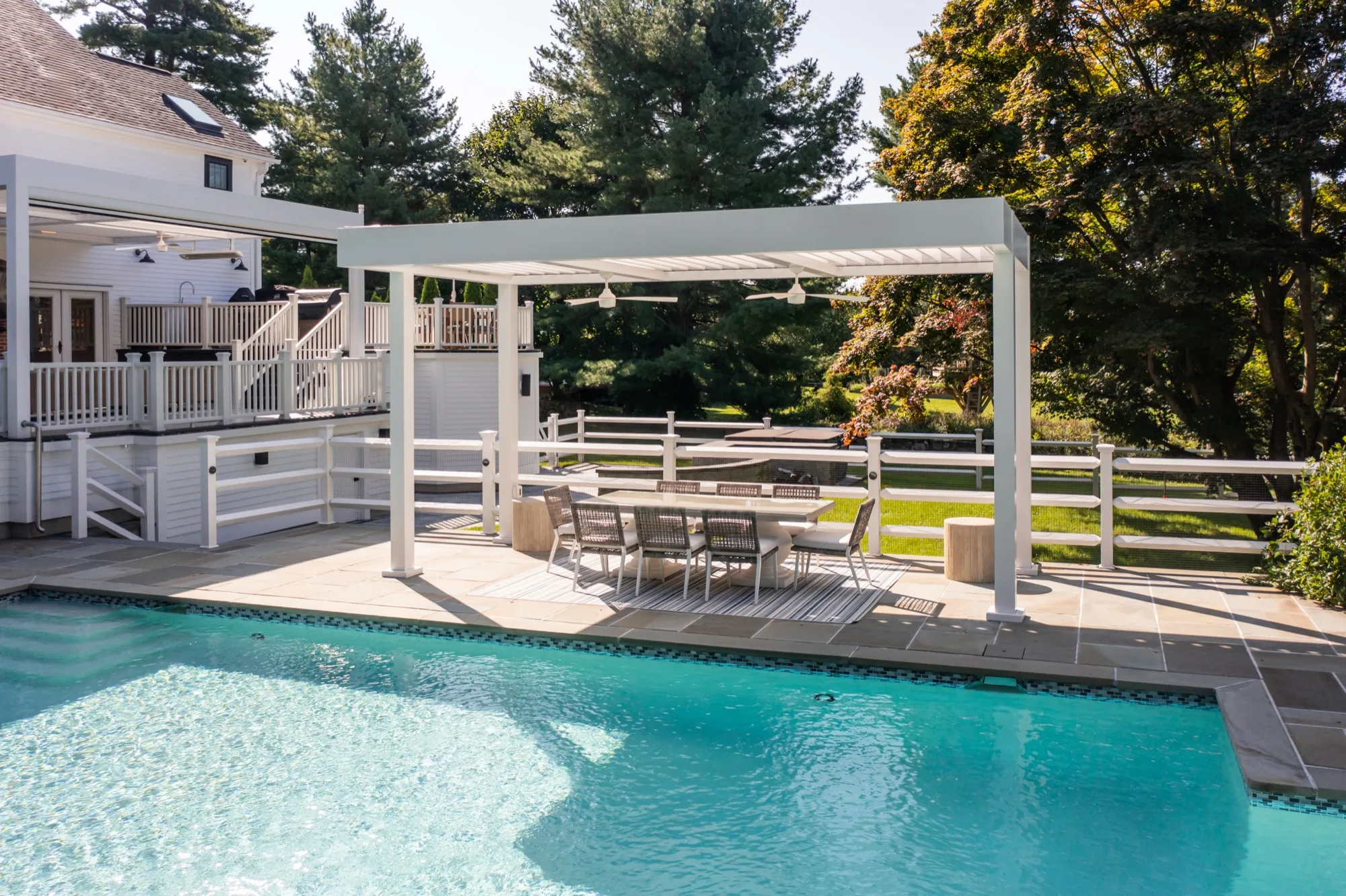
Permits and Documentation Protect Value
Where a permit is required for your project — and for attached structures, electrical work, or new footings, it usually is — that permit becomes part of the property's record. It's what an appraiser references, what a buyer's attorney asks for, and what protects you from a stop-work order or a resale headache years down the line. Where permits are needed, Breslow handles or assists with the entire process; it's part of the same in-house lifecycle as design and installation, not a separate hurdle you're left to manage alone.
Keep the paper trail intact after installation, too — permit approvals, engineering letters, and any inspection sign-offs are worth filing with your other home records. A future buyer's attorney or your own future self, refinancing or insuring the property years later, will be glad the documentation didn't get lost in a drawer.
Thinking in Decades
A structure engineered to a real wind and snow standard, installed by the crew that designed it, and backed by a 5-year structural warranty from Breslow plus Azenco's manufacturer warranty on the louver mechanism, isn't built to last one owner's tenure — it's built to outlast several. That's the actual value argument: not a projected resale bump, but a permanent, documented improvement to how much of the property is usable, in every season, for as long as the home is owned.