Key Takeaways
- Outdoor entertainment areas increasingly function as a second living room, and the structure covering them should account for TV placement and audio zones from day one.
- Standard indoor televisions are not built for exterior humidity, temperature swings, or direct sun — an outdoor-rated display is a different category of product entirely.
- A motorized louvered roof does double duty for entertainment: closing the louvers cuts glare on the screen and shelters the display and speakers in changing weather.
- Wiring for power, data, and zoned audio is dramatically simpler and cheaper to run during the structure's on-site installation than to retrofit afterward.
An outdoor structure built for a family that watches football on fall Sundays or hosts summer dinners with music playing needs a different design brief than one built purely for shade. Entertainment components — a television, a sound system, the wiring behind both — are no longer a rare add-on request; they're close to standard on a modern outdoor living project, and they work far better when planned with the structure than bolted onto it afterward.
The Outdoor Living Room
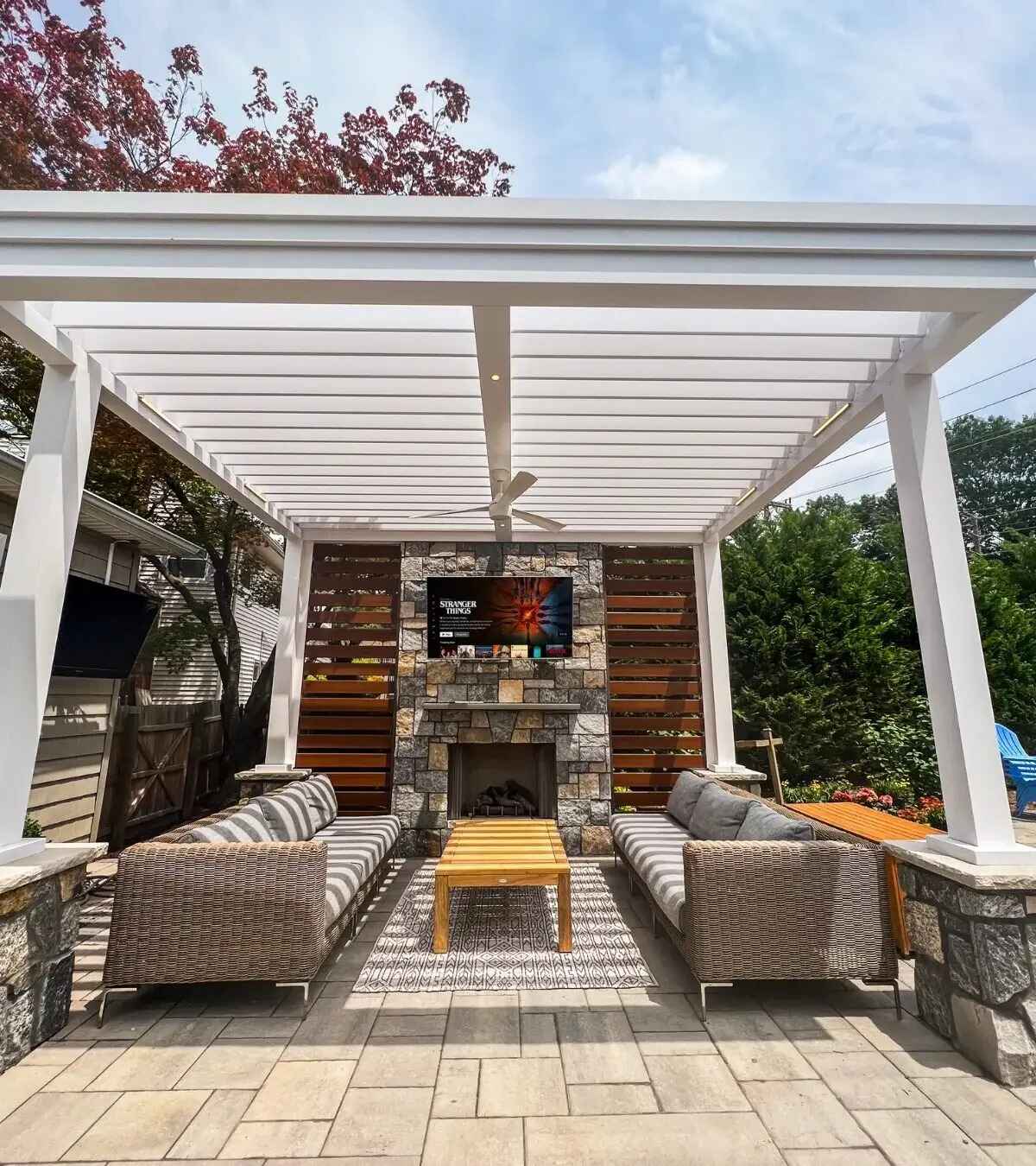
The framing that makes this easiest is simple: treat the space under the roof as a second living room, not an outdoor patio with extra furniture. That reframing changes the design questions from "where do we put a TV" to "how does this room actually get used," which tends to produce a better layout for both the screen and everything around it, from seating sightlines to where conversation naturally happens. The portfolio includes several outdoor living spaces designed around exactly this kind of layout.
Outdoor-Rated vs. Indoor TVs
The most common mistake is assuming a standard television, protected by a roof, is good enough outside. It isn't. Exterior humidity, wide day-to-night temperature swings, and direct sun all shorten the life of electronics built for a climate-controlled living room, and an indoor panel's screen brightness is typically no match for daylight glare on a bright afternoon. Outdoor-rated displays are built as a different category of product — sealed against moisture and temperature swings, with brighter panels engineered to stay legible in daylight. Even under full cover, that distinction is worth getting right the first time rather than replacing a failed indoor unit a year in.
Enclosure design matters here too. A display mounted flush against a wall or into a recessed niche within the structure fares better over time than one hanging exposed on an open post, simply because it has less direct exposure to wind-driven rain and less thermal swing from direct sun hitting the back of the panel. This is exactly the kind of detail worth discussing with your designer rather than deciding after the fact once the mounting location is already fixed.
Placement: Glare and Sightlines
Screen placement under a structure follows the same logic as indoor room design — account for viewing distance and sightlines from where people will actually sit — with one added variable: direct sun. A screen facing west into afternoon glare will wash out no matter how bright the panel is, so orientation matters as much as wall placement. This is where a motorized louvered roof does genuinely useful double duty: closing the louvers during a bright afternoon cuts glare on the screen and, in changing weather, shelters both the display and the electronics behind it. That flexibility is one of the practical advantages an adjustable roof has over a fixed structure for this specific use case.
Seating distance deserves the same care as an indoor media room, even though the temptation outside is to treat every surface as a general gathering spot rather than a considered viewing arrangement. A lounge grouping placed too close to a large panel feels the same outside as it would indoors — a compromise nobody planned for, worked around after the furniture was already delivered.
Sound: Zones and Neighbors
Audio outdoors behaves differently than indoors — there are no walls to contain it, which means volume that's comfortable at a dining table can carry much further than intended toward a pool deck, a neighbor's yard, or a quiet corner of the property. Outdoor-rated speakers, arranged into independent zones rather than one blanket system, let a homeowner keep dinner conversation audible near the table while still filling a lounge or pool area for a party. Zoning is a wiring decision made at construction, not something easily added with a single retrofit speaker.
Property line proximity is worth a moment's thought as well, particularly on smaller lots or in tighter neighborhoods where a game-day crowd's audio can carry further than expected on a still evening. Zoned control that lets a homeowner keep the perimeter and pool-area speakers lower while the main lounge zone stays louder solves this without requiring anyone to turn the whole system down.
Wire It During Construction
The single most important piece of advice in this entire topic: run the power, data, and speaker wiring while the structure is being built, not after. Breslow's own crews install most R-Blade™ projects in roughly 3 to 5 days on site, and low-voltage runs for TV and zoned audio add very little time to that window when planned in advance. Adding the same wiring after the structure is finished, fishing lines through completed posts and beams, is a far more invasive and costly exercise, and one that's entirely avoidable with a conversation during design.
This is also the point at which conduit for future upgrades is cheapest to include. A homeowner who isn't ready to commit to a specific display or speaker brand at the time of construction can still have empty conduit run to the intended locations, leaving the final equipment decision for later without paying the retrofit premium twice.
Ask your contractor: "Is the entertainment wiring included in the construction plan, or will it be a separate project after the structure is finished?" The answer tells you whether entertainment was actually designed in.
Game Day, Outside
A well-planned outdoor entertainment setup shows up in small details as much as big ones: a screen that's actually watchable at 3pm, sound that reaches the lounge chairs without disturbing the next-door yard, a roof that closes when the weather turns without anyone needing to unplug anything. None of it is complicated, but all of it needs to be part of the design conversation from the start, and it costs nothing to raise it during your design consultation — only to raise it late.
Frequently Asked Questions
Can you put a regular TV outside under a pergola?
A standard indoor television is not built to handle outdoor humidity, temperature swings, or direct sunlight, and it will fail well before an outdoor-rated display designed for those conditions. Even under a covered structure, an outdoor-rated TV is the right category of product for a permanent installation.
Where should an outdoor TV be placed under a louvered pergola?
Placement should avoid direct west-facing glare and account for viewing sightlines the same way an indoor room would, while taking advantage of the structure's louvers, which can close to reduce glare and shelter the screen and electronics during changing weather.
Do I need special speakers for outdoor sound?
Yes. Outdoor-rated speakers built for exterior conditions, arranged in zones so volume can vary between a dining area and a pool deck, work better than repurposing indoor equipment, and wiring for zoned audio is best planned during the structure's construction.
When should I plan for a TV and audio system, before or after the pergola is built?
Before. Running power, data, and speaker wiring during the structure's installation is far simpler and less expensive than retrofitting it afterward, which is why entertainment components should be part of the initial design conversation.