Key Takeaways
- Salt air accelerates corrosion through chloride-driven electrochemical reactions that attack fasteners and weld points long before damage becomes visible on the finish.
- Marine-capable powder coating on properly pretreated aluminum is the baseline for coastal structures — not an upgrade — and Breslow's R-Blade™ system is available in 200+ RAL colors without sacrificing that protection.
- 316 stainless steel hardware resists chloride pitting far better than standard fasteners, which is why hardware — not the frame — is usually where budget systems fail first.
- The Azenco R-Blade™ system Breslow installs carries a Miami-Dade wind certification up to 195 mph, the toughest wind-and-water testing standard used in U.S. construction.
What Salt Actually Does to a Structure
Salt air is not a cosmetic problem. Chloride ions carried on ocean humidity settle on every exposed surface of a metal structure and go to work immediately, breaking down the thin oxide layer that otherwise protects aluminum from oxidation. The damage compounds at every seam, weld, and fastener point — the places a homeowner never looks until streaking or pitting shows up on the surface itself. By the time corrosion is visible, it has usually been progressing beneath the finish for a season or two already.
Distance from the water matters less than most people assume. Salt-laden air travels well beyond the dune line, and a home a mile or two inland can see nearly the same exposure as one on the beach, especially along the New Jersey and Connecticut coastlines where prevailing onshore winds push moisture steadily landward. Any structure specified for a coastal property — a pergola, a screen system, a run of outdoor cabinetry — has to be engineered for that reality from the first drawing, not patched after the first rust bloom shows up.
Powder Coating Done Right
Aluminum resists corrosion far better than steel, but the finish is still what stands between the metal and the air around it. A quality powder coat starts with pretreatment — a multi-stage wash and conversion coating that etches the aluminum surface so the finish bonds mechanically, not just cosmetically. Skip that step, or rush it, and the coating can look identical on delivery day and still fail within a few coastal seasons.
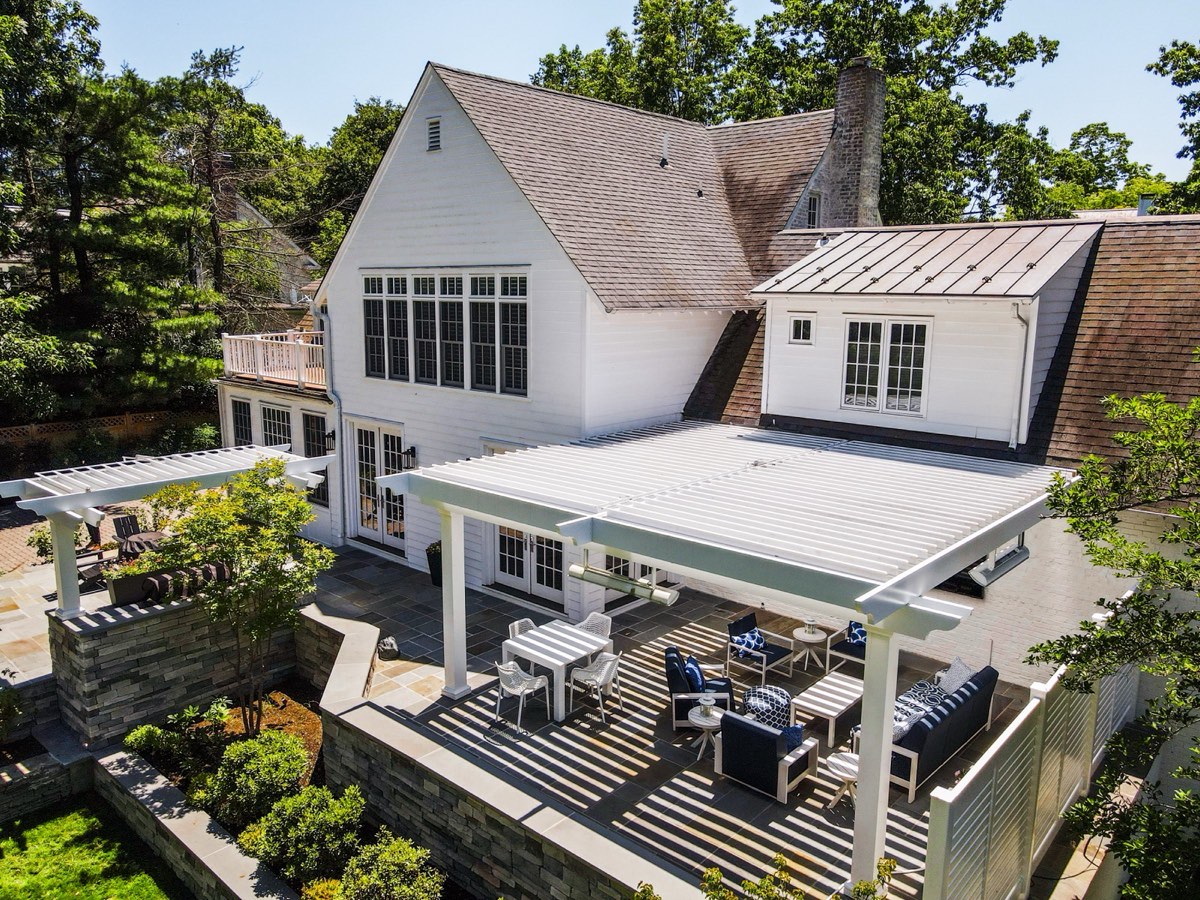
This is where Breslow leans on the Azenco system rather than a generic aluminum extrusion. Breslow installs the Azenco R-Blade™ louvered roof in more than 200 RAL colors, each applied over a pretreated, marine-capable finish — meaning a homeowner on the water doesn't have to trade design freedom for corrosion resistance. The same system carries a Miami-Dade wind certification up to 195 mph, the toughest wind-and-water testing standard used in the country, which is a reasonable proxy for how seriously the finish and hardware have been engineered for exposure, not just for appearance.
Hardware: The Weak Point
Frames get the attention; hardware gets the failures. A structure can be built entirely from marine-capable aluminum and still corrode from the inside out if the fasteners, brackets, and hidden connectors aren't specified to match. Standard zinc-plated or lower-grade stainless hardware will pit and streak in a chloride-heavy environment years before the frame around it shows any wear at all — and once a fastener starts bleeding rust down a powder-coated post, no amount of washing brings the finish back.
316 stainless steel — the same grade used in marine hardware generally — is the baseline Breslow specifies at connection points on coastal projects. It costs more than the fasteners a landscaper or general contractor might default to on a side-line pergola job, which is exactly why it is worth asking about directly before a contract gets signed.
Ask your contractor: what grade of stainless hardware is specified at every connection point, and is it documented in writing?
Exposure Categories, Explained Simply
Structural engineers classify a site's wind exposure using categories that run roughly from B (suburban, tree-lined, sheltered) to C (open terrain) to D (immediately adjacent to large open water). A property directly on Long Island Sound, Barnegat Bay, or the open Atlantic typically falls into the most demanding of these categories — which changes the wind loads an engineer has to design against, independent of whatever material choices have already been made.
This is not a detail to guess at. Where required, Breslow provides PE-stamped structural engineering scoped to the specific site — its exposure category, its span requirements, its local wind and snow data — rather than a generic spec sheet borrowed from an inland installation. Every coastal project should start with that conversation, not end with it.
Coastal Maintenance Rhythm
Even a properly specified coastal structure needs a maintenance rhythm an inland installation doesn't. Salt deposits build on horizontal surfaces and inside louver tracks between rains, and a periodic fresh-water rinse — more frequent after a nor'easter or a summer storm surge — keeps chloride from sitting on the finish long enough to start working on it. An annual inspection of hardware, seals, and finish integrity catches early signs before they turn into a repaint or a bracket replacement down the road.
Breslow services every product it installs, for the life of that product, through ongoing service built around exactly this kind of coastal maintenance rhythm — not a one-time installation and a phone number that stops answering afterward.
Shore Projects in the Portfolio
Some of Breslow's most demanding engineering work sits within sight of the water. A Monmouth Beach, NJ project in the portfolio was designed and engineered specifically for its oceanfront exposure — full marine-capable hardware, a finish specified for the site rather than pulled off a catalog page, and structural documentation to match. It's one entry in a body of shore work built across 250-plus premium installs, from a firm that has been solving Northeast weather problems, coastal and otherwise, for 102 years.
A structure built for the coast should be indistinguishable, five and ten years out, from one built for an inland backyard — same finish, same hardware, same performance. That is the standard a coastal pergola should be held to, and it starts with the engineering, long before it gets to the color chart.
Frequently Asked Questions
Do coastal properties need special engineering for a pergola?
Yes. Properties near open water typically fall into a higher wind-exposure category, which changes the required design loads. Where required, Breslow provides PE-stamped structural engineering scoped to the specific site rather than a generic inland spec.
What finish holds up best on a structure near saltwater?
A properly pretreated, marine-capable powder coat is the standard for coastal aluminum. Breslow installs the Azenco R-Blade system with this level of finish across more than 200 RAL colors, so protection doesn't limit design options.
Is standard stainless steel hardware enough at the shore?
Standard-grade stainless will still pit and streak in a chloride-heavy environment over time. 316 stainless steel, the marine-grade standard, is what Breslow specifies at connection points on coastal projects.
How often should a coastal pergola be washed down?
A periodic fresh-water rinse to remove salt buildup, more frequent after storms, along with an annual hardware and finish inspection, is the maintenance rhythm coastal structures need beyond what an inland installation requires.