Key Takeaways
- A spring inspection should check both fabric (mildew, stretching, moisture) and frame (bent arms, loose joints, corrosion) before the first use of the season.
- A gentle brush-and-rinse cleaning restores solution-dyed acrylic fabric better than letting a winter's buildup accumulate season after season.
- Testing the motor and wind sensor before regular use confirms the automatic protection the system depends on is actually working.
- Breslow services every product it installs for the life of that product — spring visits can be scheduled directly at breslow.com/service/.
First Look: Frame and Fabric Inspection
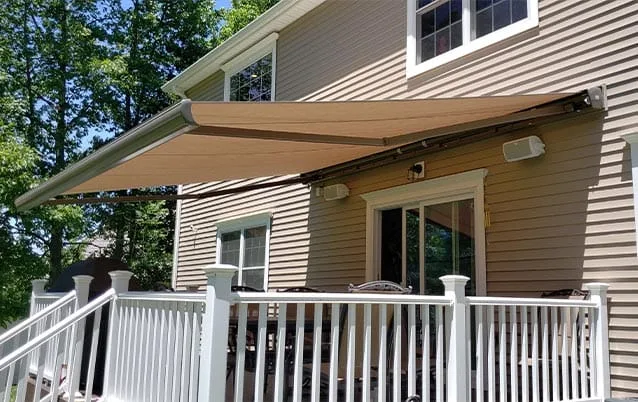
The first warm weekend of the year is usually when a retractable awning gets its first real look since fall. Before extending it for the season, it's worth checking the fabric for anything that shifted or settled over winter — mildew spots, a fold that's holding moisture, or fabric that looks stretched at the seams — and giving the frame a visual pass for anything bent, loose, or corroded at the joints. Most of what turns up here is minor and easy to correct in spring; the point of the inspection is catching it before it becomes something bigger by August.
It's worth doing this inspection with the awning fully extended rather than glancing at it retracted. Issues that hide inside the folds when the fabric is rolled up — a stain, a soft spot, a seam under stress — only become visible once it's out in full. A five-minute walk-around at full extension tells a far more complete story than a look from the kitchen window.
Spring is also a reasonable time to compare the awning against how it looked the previous fall, if photos exist from a takedown inspection. A side-by-side isn't necessary every year, but it's a useful habit for catching gradual change — a bracket that's drifted slightly, a color that's faded a shade more than expected — that's easy to miss looking at the system in isolation.
Cleaning Before First Use
Even a properly winterized awning collects dust, pollen, and residue over months of sitting retracted. A soft brush to knock off loose debris, followed by a gentle rinse with cool water, is usually enough to bring the fabric back to where it should be for the season. Solution-dyed acrylic fabrics are built to resist fading and mildew, but that resistance holds up longer when the fabric is kept clean rather than left to accumulate a full winter's buildup season after season.
Spring pollen deserves particular attention in the Northeast, since it settles into fabric texture in a way that a quick wipe-down doesn't always fully address. Letting the fabric dry completely after rinsing, rather than retracting it damp, keeps that first spring cleaning from simply trapping moisture back into the folds it was meant to clear out.
“We ended up setting up a group chat with him and Jeannie, extremely responsive, had someone out as soon as he could get someone out, if he was going to be delayed, he called us to be delayed.”
— Breslow homeowners · watch real client clips
Test the Motor and Sensors
Before the first real use of the year, run the awning out and back in a few times and confirm the motor sounds and moves the way it should — no hesitation, no uneven extension, no unusual noise. If the system includes a wind sensor, this is also the moment to confirm it's still responding correctly; a sensor that isn't functioning is effectively an awning with no automatic protection at all, which defeats the purpose of having motorized it in the first place.
A few full cycles also give the fabric itself a chance to shed any stiffness it developed sitting folded through the cold months. Fabric that unrolls smoothly on the first try in April is a good sign; fabric that catches or resists partway through is worth a closer look before it's put into regular daily use.
Hardware and Mounting Checks
Freeze-thaw cycles over winter can work fasteners loose even when nothing looks visibly wrong. A spring check of the mounting brackets, arm pivots, and any exposed hardware catches this early — tightening a bracket in April is a five-minute job; addressing a bracket that's failed under load mid-summer is not.
This is also worth pairing with a look at the wall or fascia the awning is mounted to, not just the hardware itself. Homes settle, and a bracket that was flush in fall can shift slightly against a wall that's moved a fraction over winter. It's a small thing to check and a considerably bigger thing to discover mid-season under load.
Signs You Should Call a Pro
Some spring findings are simple homeowner fixes — a light cleaning, a quick wipe-down. Others are signals to call in a professional: a motor that hesitates or won't fully retract, fabric that's developed a persistent mildew stain that cleaning doesn't lift, a frame arm that's visibly bent or uneven on one side, or a sensor that no longer responds to wind. None of these are emergencies, but none of them improve by waiting either.
The general rule worth following: anything involving the motor, the mounting connection to the house, or the frame's structural alignment is worth a professional look rather than a DIY attempt. Fabric cleaning and basic hardware tightening are reasonable for a homeowner to handle; anything that touches how the system is actually attached to the building is not.
Schedule a Spring Service Visit
Breslow services every retractable awning it installs for the life of the product, and a spring visit is the easiest way to start the season with everything — fabric, motor, sensors, hardware — confirmed and working correctly. Requests can be scheduled directly at breslow.com/service/, whether the system was installed by Breslow originally or simply needs a professional look before the season gets underway.
Pairing a spring opening visit with the fall takedown from the previous year creates a rhythm that catches most issues while they're still minor — a loose bracket before it's a repair, a fabric stain before it's set permanently, a hesitant motor before it stops responding altogether. For a system that's meant to last for years, that twice-yearly check is a small investment against a much larger one down the road.
Frequently Asked Questions
How often should an awning be serviced?
A twice-yearly rhythm — a fall takedown and winterization visit, and a spring opening and inspection visit — covers most of what a retractable awning needs to run reliably year after year.
Can I clean awning fabric myself?
Light cleaning is a reasonable homeowner task: a soft brush to remove debris followed by a gentle rinse with cool water. Harsh chemicals, bleach, and pressure washing should be avoided, since they can damage the fabric's finish.
What should I check before using my awning for the first time each spring?
Inspect the fabric for mildew or stretching, check the frame and mounting hardware for anything loose or corroded, and run the motor and wind sensor through a few cycles to confirm everything is functioning before regular use begins.
Does Breslow service awnings it didn't originally install?
Requests can be scheduled directly at breslow.com/service/, whether the system was installed by Breslow originally or simply needs a professional look before the season gets underway.