Key Takeaways
- A patio that sat empty most of the summer became space this homeowner now uses "at all times, and just as needed."
- The change came from motorized louvers, not a fixed roof — the space adjusts to conditions instead of living with one setting.
- Fans and other add-ons layer onto the structure; your designer scopes the right combination for your specific footprint.
- Residential projects with Breslow typically run $75,000–$150,000, scoped exactly during a free Zoom consultation.
"With the Pergola, with the Louvers, with the fans, we're able to be out here at all times, and just as needed."
— Breslow homeowners
Most homeowners who reach out to Breslow have a version of the same complaint before they ever call: there's a patio, a deck, a stretch of yard right off the kitchen — and for three or four months a year, nobody goes near it. Not because it's poorly designed. Because it's either baking in direct sun through the middle of the day or unusable the second a forecast turns. That's exactly the space this homeowner is describing on camera above, and it's worth sitting with what actually changed, because the answer isn't "we added a roof."
A Space That Used to Sit Empty
Before the project, this was dead space in the plainest sense — square footage attached to the house that nobody used because the conditions never cooperated. Too hot to sit in from late morning through early evening in summer, and no real shelter once the weather turned in fall. It's a familiar story, and it's one of the most common reasons homeowners start looking into a louvered pergola in the first place: not to add a feature, but to get back space they already paid for and already own.
What stands out in this particular clip isn't just that the space got shade — it's the word "always." Not "we use it more now." Always, and as needed, which is a different claim entirely. It means the space stopped being conditional on the weather being cooperative that day.
Why Louvers — Not a Fixed Roof — Made the Difference
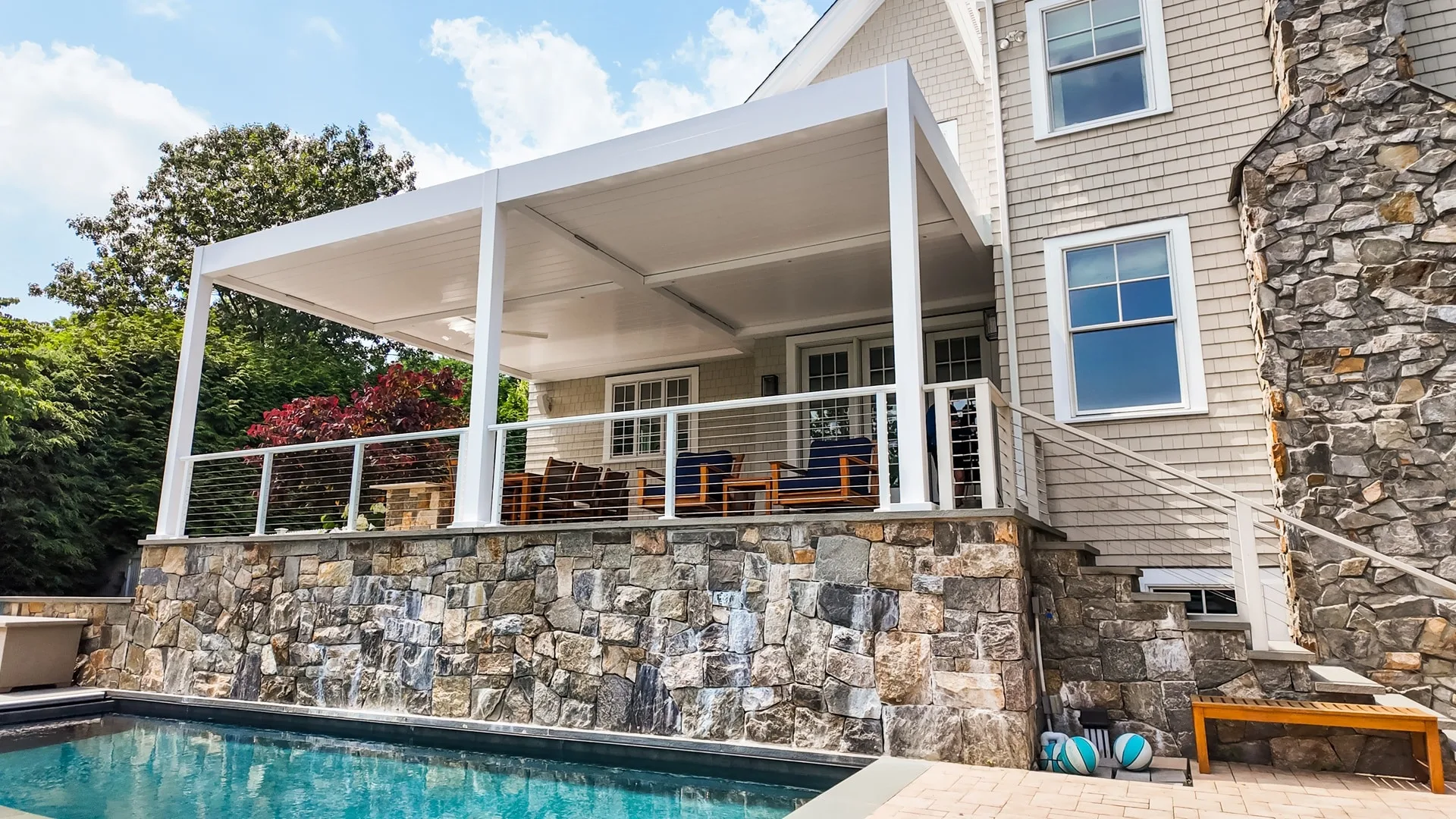
The distinction matters. A fixed solid roof solves the rain problem permanently but creates a new one: the space is now shaded and covered all the time, whether that's what you want on a mild October afternoon or not. The Azenco R-Blade motorized louvered pergola that Breslow installs works differently — the louvers rotate open or closed by remote, so the same structure can flood the space with light and air in the morning, close down tight for full shade at 2pm, and adjust again as the sun moves. It's not a compromise between shade and openness; it's the ability to choose either one, minute to minute, without touching a tool.
The homeowner also mentions fans as part of what makes the space work "at all times." That's a common pairing — motorized louvers manage sun and rain, while ceiling fans and, on cooler days, heating (Breslow installs Bromic and Infratech units) manage the air temperature itself. None of these are afterthoughts bolted onto a finished structure; they're specified into the design from the first Zoom consultation, based on how the homeowner actually plans to use the space across the calendar year, not just in July.
What "Three Seasons" Actually Means for a Buyer
If you're evaluating whether a project like this is worth it for your own backyard, the honest framing isn't "will it look nice" — it's "will I actually use it in September, in April, on the Tuesday afternoons nobody plans around." The engineering answer is that a motorized system extends usable time on both ends of summer, because the space isn't locked into one fixed condition. Combined with heating for the shoulder-season evenings, many homeowners find they're outside considerably more months of the year than they expected when they started the conversation — which is the whole economic case for a project in this price range. A $75,000–$150,000 structure that gets used four months a year pencils out very differently than one that gets used nine.
It's also worth asking any contractor directly: does the roof adjust to conditions, or does it lock you into one? That single question separates a motorized louvered system from a fixed pergola or a permanent awning, and it's the difference this homeowner is describing when they say "at all times, and just as needed."
Seeing It for Yourself
The best way to know whether a project like this fits your own space is the same first step every Breslow client takes: a free design consultation over Zoom, where a designer walks the space with you, talks through style and layout options, and gives a realistic investment range before anyone commits to anything. From there, if it's a fit, a designer visits the home with a Matterport scanner for precise measurements, and the project moves into 3D renderings on your actual house. You can browse more real installations in the project portfolio, or hear directly from other homeowners at breslow.com/testimonials/.
Frequently Asked Questions
How does a louvered pergola make a hot patio usable again?
The Azenco R-Blade motorized louvered pergola that Breslow installs lets you dial in shade by rotating the louvers by remote rather than living with one fixed roof condition. Closed for full shade during peak sun, open to let light and air through in the morning or evening — the same footprint adjusts to the actual conditions instead of staying scorching hot all afternoon.
Do I need to add fans or heating to get three-season use out of the space?
Many homeowners do integrate ceiling fans and heating into their structure alongside the motorized louvers — Breslow installs Bromic and Infratech heating for the cooler months. Your designer scopes out what combination of louvers, airflow, and heat makes sense for your specific space during the design consultation.
What does a project like this typically cost?
Residential louvered pergola projects with Breslow typically run from about $75,000 to $150,000 depending on size, attachment type, and integrations like screens, heating, and lighting — published ranges are at breslow.com/cost/. Every quote is scoped to the actual space during a design consultation.
What's the first step to see if this would work for my backyard?
A free design consultation over Zoom. Breslow walks through your space, discusses style options, and gives a realistic investment range up front before anyone commits to anything — no home visit required for that first conversation.