Key Takeaways
- Tommy's Tavern + Tap has built with Breslow across four New Jersey locations — Edison, Clifton, Bridgewater, and Sea Bright — standardizing its outdoor dining approach on one system and one installer.
- Edison's build is a 17-bay motorized louvered structure covering the restaurant's full rooftop dining footprint.
- Standardizing across locations means one design language, one engineering standard, and one service relationship instead of renegotiating scope and warranty terms at every new address.
- Breslow's in-house design-through-installation model, plus lifetime service on every product installed, is what makes repeatable multi-location rollouts possible.
Most restaurant groups don't set out to build a standard across their properties — it happens gradually, almost by accident, because the first location worked better than expected. Tommy's Tavern + Tap didn't order four separate patio covers from four separate contractors, one per opening. It built the same relationship, the same system, and the same installer into every new location — starting with ground-level patio covers in New Jersey and growing, over time, into the larger rooftop builds at Sea Bright and Edison.
When a Group Standardizes
A single-location patio cover is a design decision. A fourth one, at a different address, under a different roofline, with a different site plan, is an operational decision — and it's usually driven by the first project performing the way it was supposed to. Once a system proves it holds up through a Northeast winter, seals reliably through a summer downpour mid-service, and gets serviced without a runaround, the calculus for the next location stops being "who should we call" and becomes "call the same people." That's the pattern behind Tommy's Tavern + Tap's rollout across four New Jersey properties with Breslow.
Edison: the Rooftop Flagship
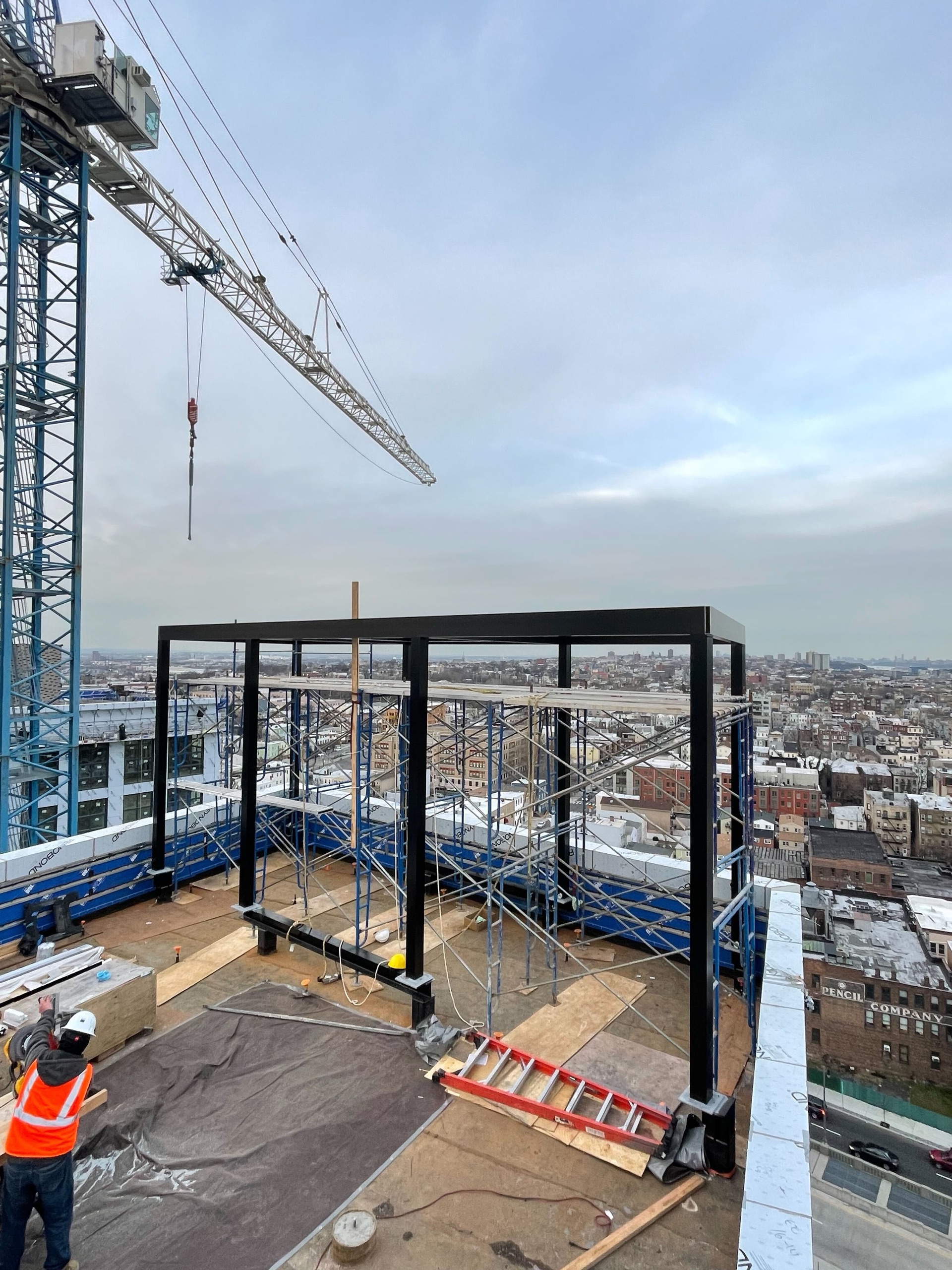
The Edison location is the largest and most structurally complex of the four builds — a 17-bay motorized louvered roof covering the restaurant's full rooftop dining footprint, engineered as one continuous system rather than a row of separate units. It requires rooftop-specific wind and load engineering alongside the standard design-to-installation process, in a way a ground-level patio doesn't. It's the clearest evidence of how far the relationship scaled over time — from ground-level patio covers to a full rooftop system covering an entire dining floor.
Clifton, Bridgewater, Sea Bright
Each Tommy's Tavern + Tap location brought its own site conditions — different footprints, different exposure, different existing architecture to integrate with — but the same underlying system and the same design language carried through. Clifton and Bridgewater are ground-level patio installations serving different neighborhood dynamics, each engineered around its own footings, drainage, and existing patio conditions rather than a copy-paste plan; Sea Bright is a rooftop build on the Jersey Shore, where coastal wind exposure and salt-air finish considerations entered the engineering conversation the way they don't inland. What stayed constant across all three was the operator's experience: one point of contact, one set of specs, one installation team that already understood the brand's standard before the first site visit.
Why One Installer Across Locations
Multi-location rollouts tend to fail in the gaps between contractors — a slightly different louver spacing at location two, a warranty that reads differently at location three, a service call at location four routed to a company that doesn't answer anymore. Breslow's model closes those gaps because design, engineering, permitting, fabrication, installation, and lifetime service all sit with the same in-house team, project after project. For an operator like Tommy's Tavern + Tap, that means the specification that worked in Edison doesn't have to be re-invented, re-negotiated, or re-explained at Clifton, Bridgewater, or Sea Bright — it simply gets built again, adapted to the site.
Consistency runs deeper than the mechanical system. Breslow's R-Blade™ line comes in more than 200 RAL colors, which means a restaurant group can specify the same finish, the same louver profile, and the same trim detail at every location — reinforcing brand identity for guests who visit more than one property, and giving the group's own design standards a single reference point instead of four slightly different interpretations. Service works the same way: because Breslow services every product it installs for the life of that product, a multi-location operator gets one phone number and one team for every site, rather than tracking down whichever installer happened to build a particular address.
Ask your contractor: "If I open a second location next year, does the warranty, the design, and the service relationship carry over — or do we start from zero?" That answer separates a vendor from a standard.
The Operator's Checklist
Groups considering the same path tend to ask a short, practical set of questions before committing to a standard: Does the system perform the same way across different footprints and exposures? Is there one warranty structure and one service contact across every location, or does each site restart the clock? Can a new location be installed without shutting down operations? And does the installer have the in-house engineering to handle a rooftop as confidently as a ground-level patio? Groups also ask whether financing terms — Breslow works with Synchrony and HFS on qualifying commercial projects — stay consistent site to site, since capital planning across a multi-location rollout is easier when the financing conversation doesn't reset at every address. Those are the questions Tommy's Tavern + Tap effectively answered before location two, and the ones any multi-unit operator should ask before repeating a vendor relationship.
Your First Location
Standardizing across four locations starts the same way building one does — with a design consultation for the first site. From there, Breslow scopes the system, engineers it for that specific building, and installs it with its own crews in 3–5 days on site, typically 4–6 weeks from order confirmation. If it performs the way it's supposed to, location two tends to be a much shorter conversation — the design questions are already answered, and what's left is mostly logistics: site conditions, timeline, and how the next rollout fits your calendar.
Frequently Asked Questions
Why do restaurant groups use the same contractor for multiple locations?
Standardizing on one installer avoids the gaps that show up between vendors — inconsistent specifications, different warranty terms at each site, and service calls routed to companies that no longer answer. Once a system performs well at the first location, repeating the same installer, design, and engineering standard at the next one is usually a faster and more reliable decision than starting over.
What is a 17-bay rooftop pergola?
It refers to a motorized louvered roof structure built across 17 structural bays or sections, engineered and installed as one continuous system rather than a row of separate units. Tommy's Tavern + Tap's Edison, New Jersey location uses a 17-bay rooftop build of this type, covering the restaurant's full rooftop dining footprint.
Does the same louvered roof system work at both ground-level patios and rooftops?
Yes, the underlying system is the same, but the engineering differs by site. Rooftop installations require additional structural and wind analysis specific to the building's height and exposure, while ground-level patios are engineered around footings, site drainage, and existing patio conditions. Tommy's Tavern + Tap uses the same system across its rooftop locations in Edison and Sea Bright and its ground-level locations in Clifton and Bridgewater.
How does Breslow handle installations across multiple restaurant locations?
Design, engineering, permitting, fabrication, installation, and lifetime service all stay in-house with the same team across every location, so the specification that works at the first site doesn't need to be renegotiated at the next one. Each new location still starts with its own design consultation and site-specific engineering, since footprint, exposure, and existing architecture vary by address.