Key Takeaways
- Wind performance in a motorized screen comes mostly from how the mesh is captured at its edges — track retention matters more than fabric weight alone.
- Reinforced track systems hold the mesh's edges within a channel on both sides, transferring wind pressure into the structure instead of letting the fabric flex and pop free.
- Wind sensors can trigger an automatic retract before gusts reach a level that risks damage, protecting the system on days no one's home to react.
- Even a well-engineered screen has honest limits — in genuine storm conditions, retracting the screen is the right call, not a last resort.
What Happens to Cheap Screens in Wind
Most people don't think about wind and screens until they've watched a bargain system fail at it. Fabric billows out of a shallow track, edges pop free of their guide, and what should be a taut, flat panel turns into a flapping sail that snaps and slaps against the structure. Grommets tear under repeated stress, the motor works harder than it was ever meant to against fabric it can't fully control, and a screen that looked fine in the showroom is visibly worn out after a single windy season.
None of that is really a fabric problem. It's a retention problem — the mesh was never captured well enough at its edges to handle real wind load in the first place.
The cost of that isn't just cosmetic. A screen flapping and straining at its edges every windy week fatigues far faster than one held steady in a proper track — fabric typically fails from repeated flex long before a single big gust ever gets the blame. What looked like a bargain on install day often turns into a full mesh replacement well ahead of schedule.
Track Retention: How Mesh Holds
The detail that actually determines wind performance is how the edges of the mesh are held, not how heavy the fabric itself is. A reinforced, channel-style track captures both edges of the screen within a guide running the full height (or width) of the opening, so wind pressure transfers into the structure's frame instead of concentrating on the fabric or a handful of attachment points. Done well, the screen stays flat and taut under load instead of ballooning outward and working itself loose.
This is exactly why two screens that look identical closed can perform completely differently in a gust — one has a properly engineered track doing the structural work, and the other is relying on the fabric and a light-duty guide to hold on by themselves.
Tension matters alongside the track itself. A screen under-tensioned in its track has more slack to catch wind and start moving before the track can do its job; correctly tensioned, the same mesh in the same track behaves far more predictably in a gust. That's a setup detail as much as a product spec, and it's part of why installation quality shows up in wind performance just as much as the hardware does.
Ratings and Honest Limits
Manufacturers test and publish wind performance data for their track systems, but the number on a spec sheet only tells part of the story. Real-world performance depends on the exposure category of your specific site — a screened opening tucked behind other structures behaves very differently than the same opening on an elevated deck facing open water. Height above grade, orientation to prevailing wind, and how sheltered or exposed the site is all shift where the honest limit actually sits.
It's worth separating two engineering questions here. The structure a screen is mounted to — an Azenco R-Blade pergola, for instance — carries its own published wind rating, up to 195 mph and Miami-Dade hurricane certified for the roof system itself. The screen mounted to its posts is a separate component with its own track and mesh performance, engineered to work within that structure rather than to independently match the roof's headline number. Both matter, and a properly designed project accounts for each on its own terms.
That's the caveat worth being upfront about: no screen system, however well engineered, is meant to function as the last line of defense in a genuine storm. Wind-rated mesh and reinforced tracks are built to handle the everyday gusts and stiff breezes that make up most of a season — not to stay deployed through a named storm.
Sensors That Protect the System
A wind sensor measures real-time conditions at the structure and automatically triggers the screen to retract once wind speed reaches a threshold that could stress the fabric or track — the same category of protection used on motorized retractable awnings, applied here to screens. That matters most on the days nobody's around to notice a gust picking up: the sensor reacts before the fabric or hardware ever takes the hit.
Automatic sensors are the primary safeguard, but most systems also allow a manual override through the same remote or app used for everyday operation — useful the moment you notice weather turning before the sensor's own threshold is reached, rather than waiting for the system to decide on its own.
Ask your contractor:
"How is your track system actually tested for wind, and how are the sensors calibrated for my site's exposure — not a brochure number for a sheltered opening somewhere else?"
Storm Protocol
Sensors handle the routine gusts well, but a forecast nor'easter or named storm deserves a manual check regardless of automation. Confirming screens are retracted ahead of genuinely severe weather — the same way you'd secure any motorized exterior product — is a five-minute habit that protects a system built to last for years, not a sign the automation failed. A short pre-storm routine covers most of it:
- Confirm every screen is fully retracted, not just partially lowered.
- Check that the sensor and remote are both responding before the storm arrives, not during it.
- Walk the track for debris or obstruction that could keep a screen from retracting all the way.
Engineering the Openings
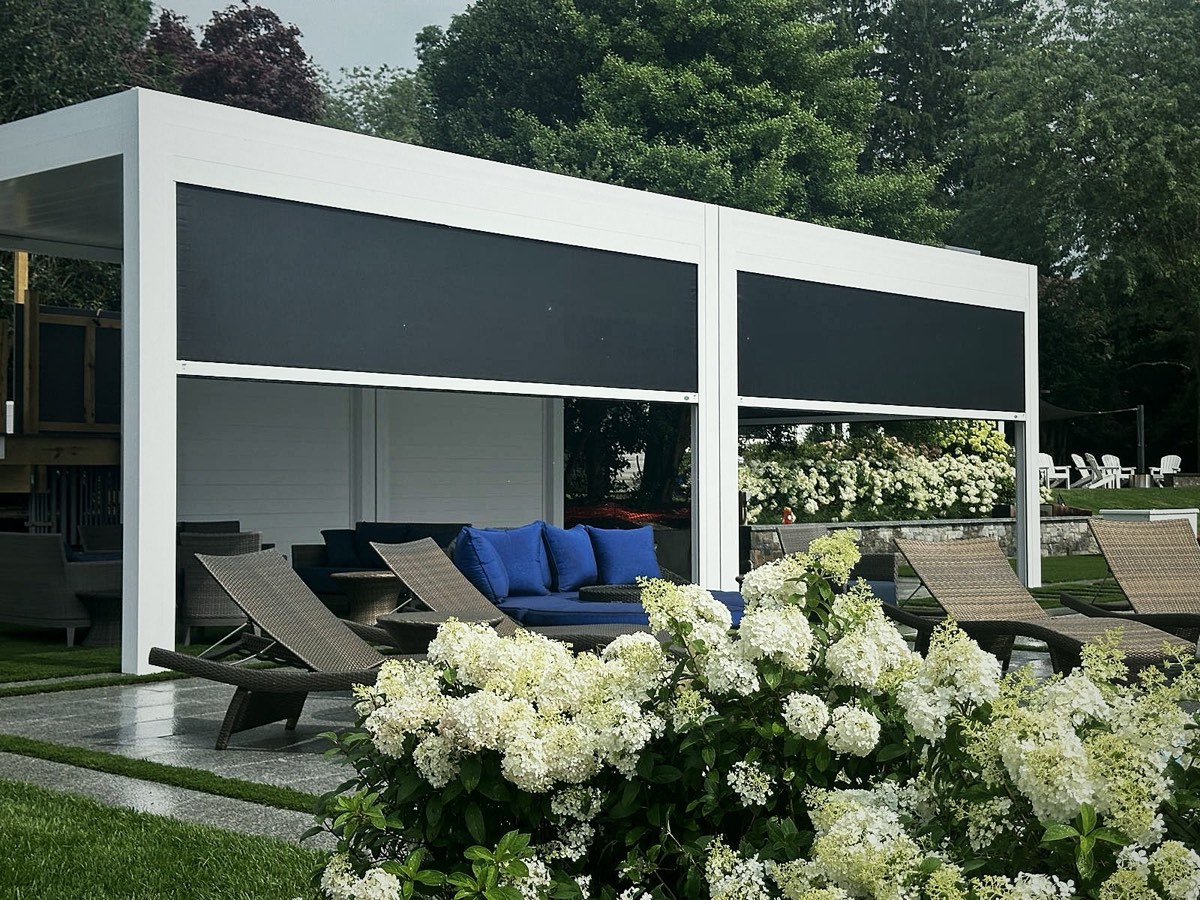
Wind performance isn't something to evaluate after the fact — it's part of how each opening should be scoped from the start. Height, orientation, and proximity to open water or shoreline all get assessed for your specific site during design, and where the supporting structure requires it, Breslow provides PE-stamped structural engineering. Full detail on the category is at motorized screens, and a Zoom design consultation is where your actual openings get scoped against your site's real exposure — before anything is priced.
Frequently Asked Questions
Are motorized screens rated for high wind?
Track retention and mesh quality vary significantly between systems, and reinforced, channel-style tracks are engineered specifically to hold mesh edges under wind load rather than letting fabric flex loose. Real-world performance also depends on your site's specific exposure — height, orientation, and how sheltered or exposed the opening is — which is why we scope wind performance to the actual opening rather than quoting one number for every project.
What is a wind sensor and how does it protect screens?
A wind sensor measures real-time wind speed at the structure and automatically triggers the screen to retract once gusts reach a threshold that could stress the fabric or track — the same category of technology used on motorized retractable awnings. It protects the system on days when no one is home to react manually.
What should I do with motorized screens during a storm?
Sensors handle routine wind automatically, but ahead of forecast severe weather — a nor'easter or named storm — it's worth manually confirming screens are retracted rather than relying on automation alone. No screen system, however well engineered, is designed to be the last line of defense in genuine storm conditions.
Can wind-rated screens be used on an exposed deck or coastal property?
Yes, though exposed and coastal sites deserve extra attention during design — orientation to prevailing wind, height above grade, and distance to open water all affect real-world performance. These factors get assessed specifically for your site during a design consultation rather than assumed from a general spec sheet.